

The Home of Authoritative Academic Works
Publishing exceptional hardcover editions for the academic community.
Welcome to Publish or Perish, Inc.®, an academic publisher—often known simply as Publish or Perish—dedicated to producing high-quality, authoritative texts for the educational community. We partner with authors and leverage our in-house production to create exceptional hardcover books. When you purchase from us, you are guaranteed an authentic, publisher-direct edition.
News & Announcements
View all-

Physics for Mathematicians Now In Stock and Shi...
Physics for Mathematicians is back in stock. This high-quality edition features sewn signatures. Order now for immediate shipping from Publish or Perish, Inc.
Physics for Mathematicians Now In Stock and Shi...
Physics for Mathematicians is back in stock. This high-quality edition features sewn signatures. Order now for immediate shipping from Publish or Perish, Inc.
-
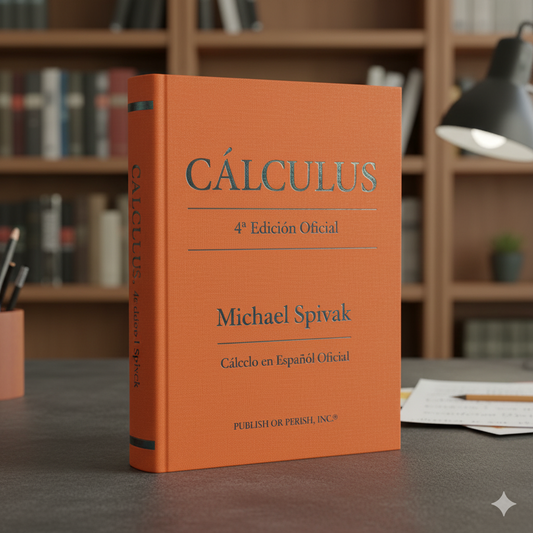
¡EXCLUSIVA! Anunciamos la Preventa Oficial de C...
¡EXCLUSIVA! Anunciamos la Preventa Oficial de Cálculo, 4ª Edición de Michael Spivak en Español 🇪🇸 ¡Estamos emocionados de compartir una noticia que la comunidad matemática hispanohablante ha esperado durante años!...
¡EXCLUSIVA! Anunciamos la Preventa Oficial de C...
¡EXCLUSIVA! Anunciamos la Preventa Oficial de Cálculo, 4ª Edición de Michael Spivak en Español 🇪🇸 ¡Estamos emocionados de compartir una noticia que la comunidad matemática hispanohablante ha esperado durante años!...


The Publish or Perish Standard
High-Standard Hardcover Editions
Every book is printed in-house on premium paper, adhering to our rigorous publishing standards. We personally inspect each copy for zero visible defects before it is packed.
Talk Directly to the Publisher
Skip the call center and automated messages. When you contact us, you’re talking directly to the people who print and pack your book—we are here to help you.
Featured products
-
A Comprehensive Introduction to Differential Geometry, Vol. 1, 3rd Edition by Michael Spivak | Publish or Perish
Regular price $112.99 USDRegular priceUnit price per -
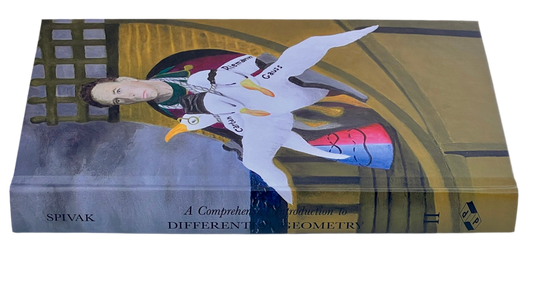
A Comprehensive Introduction to Differential Geometry, Vol. 2, 3rd Edition by Michael Spivak | Publish or Perish
Regular price $94.99 USDRegular priceUnit price per -
A Comprehensive Introduction to Differential Geometry, Vol. 3, 3rd Edition by Michael Spivak | Publish or Perish
Regular price $94.99 USDRegular priceUnit price per$0.00 USDSale price $94.99 USD -
A Comprehensive Introduction to Differential Geometry, Vol. 4, 3rd Edition by Michael Spivak | Publish or Perish
Regular price $103.99 USDRegular priceUnit price per$0.00 USDSale price $103.99 USD






This structured data helps search engines understand your organization better. The actual JSON-LD markup is embedded in the page head and is invisible to visitors.